“the West Coast” search results (600)

Introduction to the flavor and taste characteristics of Nicaraguan Tianyi Manor Coffee
Columbus arrived here in 1502 and reached the east coast of Nicaragua. In 1522, Spanish colonists began to conquer the region. The cities of Granada and Leon were founded in 1524. From then on, Nicaragua became a Spanish colony and came under the jurisdiction of the Governor's Office of Guatemala. The city of Leon developed into a political and cultural center; Granada became a commercial and agricultural center. In the later period of colonial rule
2016-09-01 Mellow taste Nicaragua providence manor coffee flavor characteristics essence
Flavor and taste characteristics of Costa Rican Saint Roman Coffee Manor with ideal acidity
The seven provinces are: Alajuela Alajuela (central, northwest of San Jose), Catago Cartago (central, east of San Jose), Guanacaster Guanacaste (northwest), Eredia Heredia (central, north of San Jose), Limon Limn (east, along the Caribbean), Pentalenas Puntarenas (west, along the Pacific Ocean), San Jose San
2016-08-24 Acidity ideal Costa Rica Roman coffee manor producing area flavor taste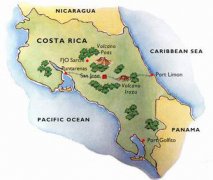
Boutique coffee beans Costa Rican coffee
Costa Rica is bordered by the Caribbean Sea to the east and the Pacific Ocean to the west, as the country's name means in Spanish: a fertile coast. Located in the south of SanJos, the capital of Tarasu, Costa Rica is one of the most valued coffee growers in the country. Tarasu (Tarrazu) is one of the major coffee producers in the world. Coffee farming is an extremely important production in Costa Rican agriculture.
2015-11-03 Boutique coffee beans Costa Rica coffee east coast Caribbean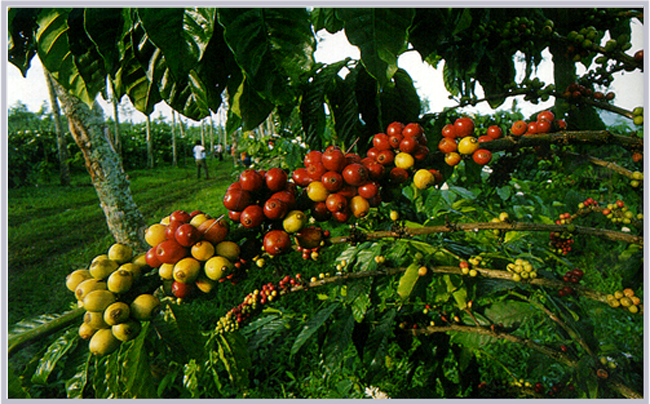
Coffee Estate Knowledge Points: Collection and classification of world boutique coffee estates in detail
Coffee comes from coffee beans, which are harvested and processed from the fruits of trees. Coffee trees grow at the equator as the center, between 25 degrees north and south latitude, known as the coffee belt in tropical or subtropical countries home, coffee beans are currently. Coffee comes from coffee beans, which in turn are harvested and processed from the fruits of trees. Coffee trees grow at the equator.
2015-12-25 coffee estate knowledge essentials world boutique collection classification detail introduction
Introduction to the treatment method of Grinding degree of Coffee Flavor description in Fenghuang Manor, Costa Rica
Costa Rica is located in the Central American isthmus, belonging to North America, 10 north latitude, 84 west longitude. It is bordered by the Caribbean Sea to the east and the North Pacific Ocean to the west, with a coastline of 1290 km (212km on the east coast and 1016 km on the west coast). Costa Rica borders Nicaragua in the north (309 km long border) and Panama (639 km long border) south-southeast. Total
2016-09-28 Costa Rica Fire Phoenix Manor Coffee Flavor description Grinding treatment way
Flavor and taste characteristics of coffee manor in Ecuador introduction to Santa Cruz Manor
Ecuador is divided into the western coast, the central mountains, the eastern Amazon River basin and the four central regions of the Galapagos Islands, with diverse climatic conditions. The western coastal plain belongs to the tropical rain forest climate, with an average temperature of 23-25 ℃. The central Andes. The intermountain basin in this area belongs to the savanna climate, and the mountain belongs to the subtropical forest climate, with perennial snow above 4000 meters above sea level. Annual average decline
2016-08-15 Ecuador coffee manor producing area flavor taste characteristics boutique introduction gram
Introduction of major coffee producing areas in the world Central and South American coffee beans, African coffee beans, Asian coffee beans
[introduction] Coffee comes from coffee beans, which are harvested and processed from the fruit of trees. Coffee trees grow at the center of the equator, between latitudes of 25 degrees south and north, and are called coffee belts in the homes of tropical or subtropical countries. at present, raw coffee comes from coffee beans, which are harvested and processed from the fruits of the trees. Coffee trees grow at the center of the equator.
2016-04-22 World main coffee producing areas introduction Central and South America coffee beans Africa Asia
General knowledge of coffee roasting definition of roasting degree and taste of all kinds of coffee
Let's talk about the definition of various baking degrees and taste. In the United States, the degree of roasting has long been defined by Cinnamon (shallow roasting), City (shallow roasting), Fully City (deep roasting) and Dark roast (heavy deep roasting, including Italian and French). However, the American preference for coffee flavor has always been strong in the west and light in the east.
2014-12-09 Coffee roasting common sense all kinds definitions tastes problems again talk about
Description of Ecuadorian Coffee Flavor with fresh Taste introduction to the processing methods of boutique coffee
Ecuador faces the Pacific Ocean, and near the equator, about 900km off its west coast, near the equator at 90 degrees west longitude, there is also a dependency of the Galapagos Islands (Galapagos Island), also known as Cologne, which produces the famous Galapagos coffee. In order to protect the natural ecology, the Ecuadorian government has designated the archipelago as a national park and banned the use of chemical fertilizers, pesticides and other chemical agents.
2016-09-26 Taste new Ecuador coffee flavor description boutique handling way square
Fragrant Coffee Flavor description of Santa Cruz Manor in Ecuador introduction of Grinding degree planting Environment
West coast: including coastal plains and foothills, high in the east and low in the west, generally below 200 meters above sea level, with some hills and low mountains at an altitude of 600 to 700 meters. Belongs to the tropical rain forest climate, the southernmost end begins to transition to the savanna climate. The average annual precipitation decreases from more than 3000 mm to about 500mm from north to south. Central Mountains: the Andes enter Ecuador from Colombia
2016-10-15 Aromatic fragrant Ecuador Crewe Manor Coffee Flavor description Grinding species
Introduction to the mild flavor of Costa Rican coffee and the characteristics of fine coffee in the manor area
The seven provinces are: Alajuela Alajuela (central, northwest of San Jose), Catago Cartago (central, east of San Jose), Guanacaster Guanacaste (northwest), Eredia Heredia (central, north of San Jose), Limon Limn (east, along the Caribbean), Pentalenas Puntarenas (west, along the Pacific Ocean), San Jose San
2016-08-25 Taste mild Costa Rica coffee flavor taste manor producing area characteristics
The taste of Dominica Santo Domingo coffee is mellow with moderately bright sour taste.
In 1586, Captain Drake of England led a fleet to attack the city of Santo Domingo, but was repelled by Spanish troops stationed in Dominica. Between 1605 and 1606, towns on the west coast of Hispaniola were often plundered by pirates, causing most of the local population to move inland. [3] at the beginning of the 17th century, French, Dutch and British pirates lived in the west of Hispaniola
2016-08-31 Taste mellow with moderate bright sour Dominica Santo Mingo coffee
The taste of the coffee in Santa Cruz Manor, Ecuador is very balanced and refreshing.
Ecuador is divided into the western coast, the central mountains, the eastern Amazon River basin and the four central regions of the Galapagos Islands, with diverse climatic conditions. The western coastal plain belongs to the tropical rain forest climate, with an average temperature of 23-25 ℃. The central Andes. The intermountain basin in this area belongs to the savanna climate, and the mountain belongs to the subtropical forest climate, with perennial snow above 4000 meters above sea level. Annual average decline
2016-08-30 Taste very balanced fresh Ecuador Crewe Manor Coffee Flavor mouth
Introduction to the unique and strong aroma of Colombian Santa Rita Manor Coffee
Costa Rica is located in the Central American isthmus, belonging to North America, 10 north latitude, 84 west longitude. It is bordered by the Caribbean Sea to the east and the North Pacific Ocean to the west, with a coastline of 1290 km (212km on the east coast and 1016 km on the west coast). Costa Rica borders Nicaragua in the north (309 km long border) and Panama (639 km long border) south-southeast. Total
2016-08-26 Aroma unique strong Costa Rica Santa Rita manor coffee flavor taste
Introduction to Santa Cruz Manor in Ecuador Coffee Flavor and Taste area, which can be made into High-quality mixed Coffee
West coast: including coastal plains and foothills, high in the east and low in the west, generally below 200 meters above sea level, with some hills and low mountains at an altitude of 600 to 700 meters. Belongs to the tropical rain forest climate, the southernmost end begins to transition to the savanna climate. The average annual precipitation decreases from more than 3000 mm to about 500mm from north to south: part of the Amazon basin. Altitude 1200mm 250
2016-08-22 Made quality mixed Coffee Ecuador Flavor palate producing area introduction gram
Costa Rican Coffee Variety producing area introduces the Fine Coffee Bean Manor Taste description
The seven provinces are: Alajuela Alajuela (central, northwest of San Jose), Catago Cartago (central, east of San Jose), Guanacaster Guanacaste (northwest), Eredia Heredia (central, north of San Jose), Limon Limn (east, along the Caribbean), Pentalenas Puntarenas (west, along the Pacific Ocean), San Jose San
2016-09-22 Costa Rica coffee variety producing area introduction boutique coffee beans manor taste
The latest origin of Costa Rican coffee introduces the flavor of Costa Rican coffee.
Costa Rica is bordered by the Caribbean Sea to the east and the Pacific Ocean to the west, as the country's name means in Spanish: a fertile coast. Located in the south of SanJos, the capital of Tarasu, Costa Rica is one of the most valued coffee growers in the country. Tarasu (Tarrazu) is one of the major coffee producers in the world. Coffee farming is extremely important in Costa Rican agriculture.
2015-11-28 Costa Rica coffee latest origin introduction flavor east coast
Flavor and taste of Ecuadorian boutique coffee beans introduction to Hasunda Coffee Garden
West coast: including coastal plains and foothills, high in the east and low in the west, generally below 200 meters above sea level, with some hills and low mountains at an altitude of 600 to 700 meters. Belongs to the tropical rain forest climate, the southernmost end begins to transition to the savanna climate. The average annual precipitation decreases from more than 3000 mm to about 500mm from north to south. Central Mountains: the Andes enter Ecuador from Colombia
2016-08-23 Ecuador boutique coffee beans flavor taste manor producing area characteristics Hasenda
USAID will join Nespresso's lineup to assist coffee farmers in South Sudan
The Republic of Sudan is a country located in northeast Africa and on the west coast of the Red Sea. It is bordered by Egypt to the north, Libya, Chad and the Central African Republic to the west, South Sudan to the south and Ethiopia and Eritrea to the east. The northeast is bordered by the Red Sea, with a coastline of about 720 kilometers, making it the third largest country in Africa and the 16th largest country in the world. Sudan has been ranked as the worst in the world by the list of failed states.
2016-04-11 United States International UNDP joining Nespresso Aid Sudan Caf
Definition of roasting degree and taste of coffee
In recent years, the American Fine Coffee Association has strongly advocated the caramelization value (Agtron number) to determine the baking degree, using the red inner line to determine the caramelization degree of coffee beans. The higher the value, the lower the caramelization, that is, the shallower the baking degree, and the lower the baking degree, the deeper the caramelization, that is, the deeper the baking degree. With the data, we can more accurately understand the baking degree of coffee beans.
2014-06-10 Coffee roasting taste